Most organizations focus on writing policies.
Few focus on what happens after.
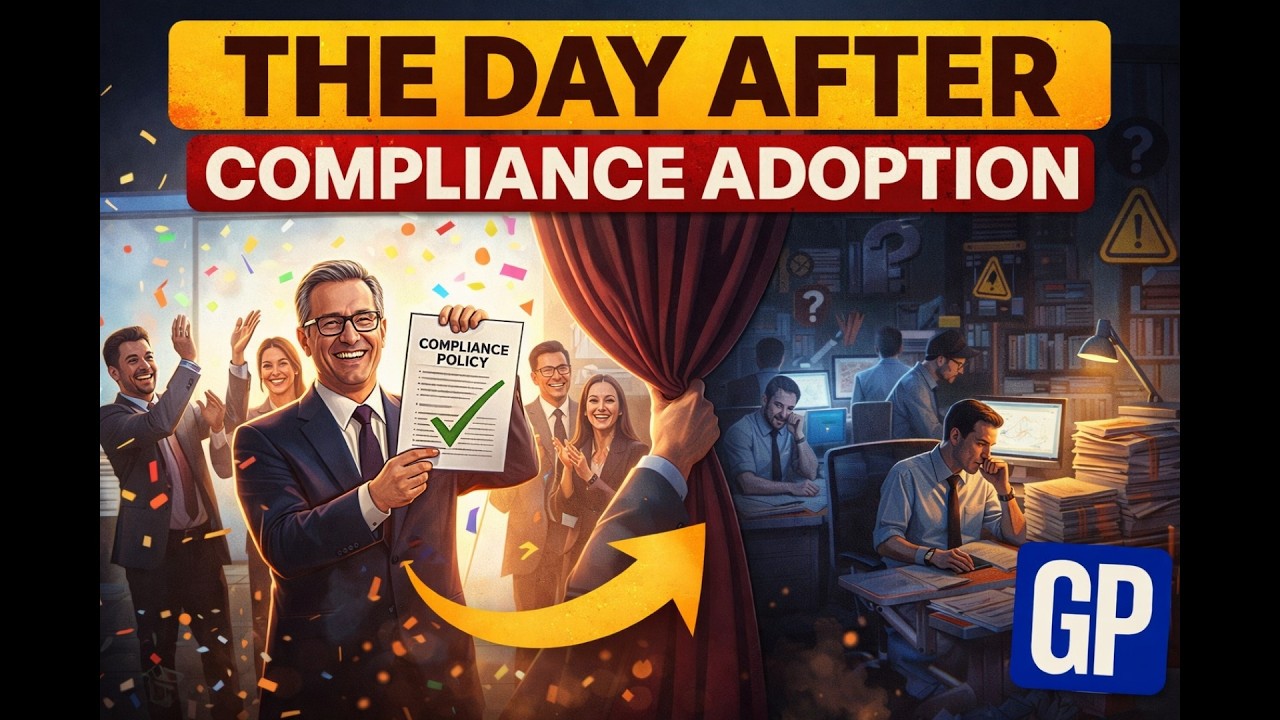
In this episode of The Day After, we explore what really happens the day after a policy is created — when implementation begins, behavior adapts, and governance risks quietly emerge.
Because governance failures rarely happen at the moment a policy is approved.
They happen later.
🔎 In this episode, we cover:
• Why policy creation feels like control — but isn’t
• The invisible behavioral shifts that follow policy approval
• How policy drift begins inside normal operations
• Why governance breakdowns feel “sudden” but aren’t
• The cognitive biases that hide early warning signs
• How experienced oversight professionals monitor real behavior — not just documentation
• The one long-term question every board and compliance leader should ask
This episode is essential viewing for:
✔ Board members
✔ Compliance officers
✔ Risk managers
✔ Governance professionals
✔ Internal audit teams
✔ Senior executives
✔ Regulatory oversight specialists
At Governancepedia, we explore governance, oversight, compliance, and risk management in a calm, practical, and experience-driven way — without noise, without politics, and without exaggeration.
Because real governance doesn’t end at approval.
It begins the day after.
📌 Subscribe for weekly governance insights
📌 Explore more governance deep dives at Governancepedia
📌 Watch the full “The Day After” series playlist
📘 Explore More on Governancepedia
If this video helped demystify governance, there’s a lot more waiting to be explored.
🌐 Visit Governancepedia
Clear, practical explanations of governance, oversight, risk, and accountability — written for real people, not rulebooks.
👉 https://governancepedia.com/
📚 Explore the Governancepedia Vault
Books, guides, and curated resources designed to help you understand governance concepts with clarity, context, and confidence.
👉 https://governancepedia.com/shop/
New content is added regularly — explore, learn, and make sense of governance without the jargon.